
Ask any experienced fly angler about choosing a fly fishing flies for trout, and you will probably hear that it depends on the conditions. There is a good reason for that. A fly that works well on one fishing trip may not be the best choice on another.
Trout feed on different types of food throughout the day. Insects, small aquatic creatures and baitfish can all become part of their diet. The type of food available, the depth at which trout are feeding and the movement of the water can all influence which fly is worth trying.
For anglers, this means choosing the right fly is not simply about picking a pattern that looks attractive in a fly box. It is about understanding what is happening in the water and selecting a fly that makes sense for the situation.
Whether you are preparing for your next trout fishing trip or adding a few new fly fishing flies for trout patterns to your collection, this guide will help you understand the main types of trout fishing flies and how to choose between them.
1. Start by Understanding What Trout Are Feeding On
Before tying on a fly, take a moment to observe the water.
Are insects landing on the surface? Can you see trout rising? Are there small fish moving through the water? Is the water shallow and clear, or deeper with a faster current?
These observations can give you a useful starting point.
For example, if trout are regularly coming to the surface to feed, a dry fly may be worth trying. If there is little surface activity, trout may be feeding below the water, making a nymph or wet fly a more sensible choice.
There is no need to make the decision complicated. Start with what you can see, choose a suitable fly and pay attention to how the fish respond.
2. Choose Between Dry Flies, Nymphs and Streamers
Most fly fishing flies for trout fall into three broad categories: dry flies, nymphs and streamers.
Each type is designed to imitate a different kind of food or feeding situation.
Dry Flies for Trout
Dry flies are designed to float on the water’s surface. They commonly imitate adult insects such as mayflies, caddisflies and other insects that trout feed on.
They are particularly useful when trout are rising and taking food from the surface.
One of the enjoyable things about dry fly fishing is being able to watch the fly drift across the water. When a trout takes it, the movement can be clearly visible.
Dry flies are worth considering when:
- Trout are rising regularly.
- Insects are visible on or above the water.
- You want to fish the surface.
- Conditions allow you to present a fly naturally.
If you are looking for patterns to try, browse our collection of dry flies for trout.
Nymph Flies for Trout
Nymphs imitate the immature stages of aquatic insects that live underwater.
Trout feed on these creatures even when there is little activity on the surface. This makes nymphs a useful choice when fish are feeding below the water rather than taking insects from the surface.
Nymph flies can be fished through different parts of a river, including runs, riffles and deeper pools, depending on the pattern and how it is presented.
They are worth considering when:
- You cannot see trout feeding on the surface.
- You want to fish below the water.
- Aquatic insects are likely to be part of the trout’s diet.
- You need a fly that can be presented at different depths.
You can explore our nymph flies for trout to find patterns suitable for different fishing situations.
Streamer Flies for Trout
Streamers are larger flies that are generally fished below the surface. Many imitate small fish, leeches or other swimming food.
Unlike a dry fly, which is usually presented as a floating insect, a streamer can be moved through the water with a retrieve.
Streamers can be a good option when:
- You want to imitate a small baitfish.
- You are fishing deeper water.
- You want to try a more active presentation.
- You are targeting trout that are feeding on larger prey.
If streamer fishing is part of your approach, take a look at our streamer flies.
3. Consider the Water Conditions
The same fly pattern will not necessarily perform the same way in every fishing situation.
Water depth, current and clarity can all influence your choice.
Clear Water
In clear water, trout may have a better opportunity to inspect the fly before taking it.
Pay attention to the size and general appearance of the natural food around you. A fly that is too large or noticeably different from what trout are feeding on may not be the best starting point.
A smaller, natural-looking pattern can be worth trying.
Fast-Moving Water
In faster water, trout may have less time to inspect food as it passes.
A suitable nymph or dry fly can be presented through the current, depending on where the fish are feeding.
The important thing is to consider how the fly will move through the water and whether it is reaching the feeding area.
Deeper Water
If trout are holding below the surface, a floating dry fly may not reach them.
A nymph or another suitable subsurface pattern can be a better choice. Weighted patterns, including tungsten bead nymphs, can help the fly reach deeper water more quickly.
You can browse the Tungsten Flies collection if you are looking for patterns designed to sink.
4. Match the Fly to the Natural Food
You may have heard anglers talk about “matching the hatch”.
The idea is straightforward: observe what trout are feeding on and choose a fly that resembles it.
This does not mean you need to identify every insect perfectly.
Start by looking at:
- The size of insects around the water.
- Their general colour.
- Whether they are on the surface or underwater.
- Whether trout are feeding on insects or chasing other prey.
If you notice small insects floating on the surface, a dry fly with a similar size and appearance may be a sensible option.
If you see insects moving underwater or find them around rocks and vegetation, a nymph may be more appropriate.
The closer your fly is to the food trout are actually taking, the more useful your choice is likely to be.
5. Does Fly Size Matter?
Yes. Fly size can make a noticeable difference.
Two patterns may look similar, but a difference in size can affect how naturally they appear in the water.
When choosing a fly, consider the size of the insects or other food available to trout.
If trout are feeding on small insects, a large fly may not be the best match. If they are chasing larger prey, a bigger pattern may be worth trying.
Rather than carrying dozens of different patterns in one size, it can be useful to have a selection of patterns in different sizes.
This gives you more flexibility when fishing conditions change.
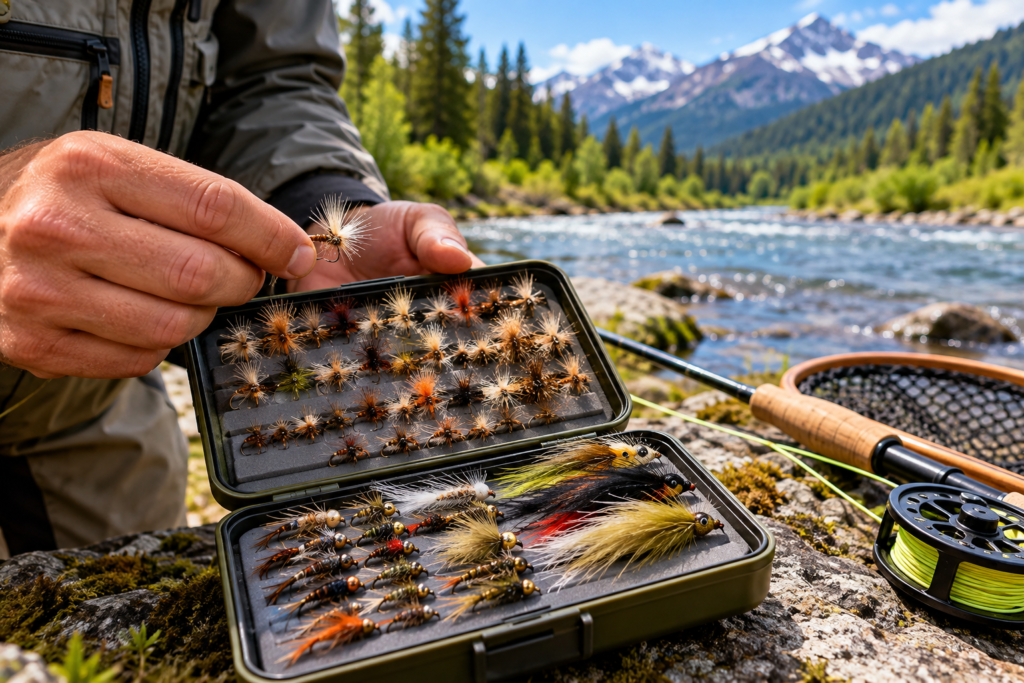
6. What Flies Should You Keep in Your Trout Fishing Fly Box?
A well-organised fly box does not need to contain every pattern available.
It is more useful to have a balanced selection that covers different feeding situations.
For example, you may want to include:
- Dry flies for surface feeding.
- Nymph flies for fishing below the surface.
- Streamers for imitating swimming prey.
- Wet flies for subsurface presentations.
- Hopper or terrestrial patterns when land insects are relevant.
The right selection will depend on where you fish and the types of trout you are targeting.
If you are adding to your collection, browse our Fishing Flies range and explore the different patterns available.
7. Why the Fly’s Presentation Matters
Choosing the right pattern is only part of the process.
How the fly moves through the water can be just as important.
A dry fly that moves unnaturally across the surface may not look like the insects trout are feeding on. Similarly, a nymph that passes too far above or below the feeding area may be overlooked.
Pay attention to the current and try to present the fly in a way that looks natural.
If trout are not responding, consider changing one thing at a time:
- Try a different fly size.
- Switch from a dry fly to a nymph.
- Choose a different pattern.
- Adjust how the fly is presented.
- Try fishing a different part of the water.
Small changes can help you understand what the fish are responding to.
8. Choosing Hand-Tied Fishing Flies
For many anglers, selecting a fly is also about finding patterns that suit their fishing style and the conditions they expect to encounter.
At Trout Fly Fishing Flies Kenya, our collection includes a range of hand-tied fishing flies for different fishing situations and target species.
From dry flies and nymphs to streamers and other patterns, the aim is to give anglers options when preparing for their next fishing trip.
You can browse our hand-tied fishing flies to explore the available patterns.
Frequently Asked Questions
Should I use dry flies or nymphs for trout?
Use a dry fly when trout are feeding on the surface. If they appear to be feeding below the water, a nymph may be a better choice.
When should I use streamer flies for trout?
Streamers are useful when you want to imitate swimming prey such as small fish or other larger food sources. They can be fished below the surface using different retrieves.
Does fly size matter when trout fishing?
Yes. Fly size can influence how closely your pattern resembles the food trout are feeding on. Having a selection of sizes can help you adjust to different situations.
How many trout fishing flies should I carry?
You do not need hundreds of patterns to get started. A balanced selection of dry flies, nymphs, streamers and other suitable patterns can give you options for different feeding situations.
Find the Right Fly for Your Next Fishing Trip
Choosing the right fly becomes easier when you take time to observe the water, understand what trout are feeding on and consider where the fish are holding.
Start with the conditions in front of you. Choose a suitable pattern, present it naturally and make adjustments if the fish are not responding.
If you are looking to add new patterns to your fly box, explore the range of fly fishing flies for Trout Fly Fishing Flies Kenya and find options for your next trout fishing trip.