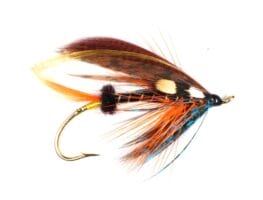
The Fully Dressed Thunder and Lightning Salmon Fly is a timeless classic in salmon fishing. Known for its vibrant colors, durable construction, and unmatched effectiveness, this traditional salmon fly has been trusted by anglers for centuries. Perfect for Atlantic salmon and other game fish, the Thunder and Lightning pattern, especially the full dressed thunder and lightning salmon fly, is a must-have in every serious fly fisherman’s collection.
Historical Significance and Pattern Evolution
The Thunder and Lightning Salmon Fly stands as one of the most revered and iconic patterns in classic salmon fishing history. First documented in Mary Orvis Marbury’s seminal 1892 work “Favorite Flies and Their Histories,” this masterfully dressed pattern represents the pinnacle of traditional salmon fly tying. Its development during the golden age of Atlantic salmon fishing coincided with an era when fully dressed flies were both an art form and a science, combining aesthetic beauty with proven fishing effectiveness.
The full dressed thunder and lightning salmon fly is widely considered one of the most effective flies in various water conditions.
Premium Materials and Construction Details
Incorporating the full dressed thunder and lightning salmon fly into your tackle box can enhance your fishing experience.
Essential Materials List:
- Hook: Classic salmon iron (sizes 1/0-6)
- Tag: Flat silver tinsel and yellow floss silk
- Tail: Golden Pheasant crest, carefully selected
- Butt: Black ostrich herl, multiple turns
- Body: Rear half – flat gold tinsel
- Body: Front half – finest black floss
- Ribs: Oval silver tinsel, evenly spaced
- Hackle: Premium orange throat hackle
- Wing: Bronze mallard strips, matched pairs
- Sides: Jungle cock eyes, symmetrically placed
- Cheeks: Blue chatterer, precisely positioned
- Topping: Golden Pheasant crest
- Head: Black thread, multiple coats of lacquer
Material Selection Considerations:
- Hook quality affects durability and hook-up rates
- Tinsel grade impacts flash and durability
- Feather quality determines overall appearance
- Thread choice affects head durability
- Lacquer type influences longevity
- Material preparation affects final look
- Storage conditions preserve materials
- Handling techniques protect delicate items
- Organization systems maintain quality
- Inventory management ensures availability
Detailed Tying Instructions and Techniques
Understanding the intricacies of the full dressed thunder and lightning salmon fly will significantly improve your tying skills.
Preparation Steps:
- Organize all materials beforehand
- Prepare feathers and materials
- Check hook quality and finish
- Establish proper lighting
- Arrange tools within reach
- Set up magnification if needed
- Test thread strength
- Prepare work surface
- Check material colors
- Review pattern recipe
Step-by-Step Tying Sequence:
- Mount hook and establish thread base
- Create tag with silver tinsel and yellow floss
- Tie in Golden Pheasant crest tail
- Form black ostrich herl butt
- Apply flat gold tinsel to rear body
- Wrap black floss for front body
- Wind oval silver tinsel ribs
- Apply orange throat hackle
- Mount bronze mallard wing strips
- Position jungle cock eyes
- Attach blue chatterer cheeks
- Add Golden Pheasant crest topping
- Form neat head
- Apply multiple coats of lacquer
Advanced Fishing Techniques and Presentations
Utilizing the full dressed thunder and lightning salmon fly during the right season can yield impressive results.
Traditional Methods:
- Classic down-and-across swing
- Step-and-swing approach
- Greased line technique
- Sink-tip presentations
- Dead drift in pools
- Upstream mending
- Cross-current control
- Wake fishing
- Deep swing tactics
- Surface film techniques
Modern Adaptations:
- Multi-tip system applications
- Shooting head techniques
- Running line control
- Advanced mending
- Tension control
- Depth management
- Speed variations
- Pattern spacing
- Presentation angles
- Strike detection
Water Reading Skills:
- Identify prime holding lies
- Recognize productive seams
- Spot underwater structure
- Detect current changes
- Read water depth
- Locate resting areas
- Find migration paths
- Identify temperature breaks
- Track fish movement
- Monitor daily patterns
Seasonal Strategies and Tactics
Adapting your strategies with the full dressed thunder and lightning salmon fly will help you target a wider range of fish.
Spring Approaches:
- Target early-run fish
- Focus on deeper pools
- Use larger sizes (1/0-2)
- Match water conditions
- Monitor temperatures
- Adapt to water levels
- Follow migration patterns
- Observe feeding behavior
- Time presentations
- Adjust techniques
Summer Techniques:
- Fish early morning periods
- Target evening sessions
- Use smaller sizes (4-6)
- Focus on shade lines
- Match light conditions
- Adjust to water levels
- Watch temperatures
- Monitor fish activity
- Time presentations
- Adapt to pressure
Fall Strategies:
- Target staging areas
- Fish deeper pools
- Use medium sizes (2-4)
- Match water conditions
- Monitor temperatures
- Adapt presentations
- Follow movement
- Watch weather patterns
- Time efforts
- Adjust techniques
Winter Applications:
- Focus on slower water
- Target deep pools
- Use larger patterns
- Slow presentations
- Monitor conditions
- Adapt to weather
- Follow fish
- Watch temperatures
- Time fishing
- Adjust methods
Technical Rigging Considerations
Leader Construction:
- Quality salmon leaders
- Proper taper design
- Breaking strength selection
- Length considerations
- Material choices
- Knot selection
- Sink rate control
- Visibility factors
- Presentation effects
- Setup variations
Terminal Tackle:
- Loop knot applications
- Direct tie methods
- Leader construction
- Line control
- Strike detection
- Depth adjustment
- Pattern spacing
- Drift control
- Presentation angles
- Setup modifications
Habitat-Specific Tactics
River Types:
- Large river systems
- Medium-sized streams
- Coastal waters
- Tidal influences
- Pool complexes
- Fast-water sections
- Slow-water areas
- Mixed depths
- Clear conditions
- Colored water
Specific Locations:
- Holding pools
- Running water
- Tail-outs
- Head pools
- Current seams
- Structure areas
- Bank water
- Mid-river lies
- Depression zones
- Temperature breaks
Advanced Presentation Methods
Traditional Techniques:
- Classic wet fly swing
- Greased line method
- Upstream presentation
- Cross-current control
- Mending techniques
- Line control
- Depth management
- Speed control
- Pattern selection
- Timing considerations
Modern Adaptations:
- Sink-tip applications
- Multi-tip systems
- Shooting hea
- Running line control
- Leader design
- Tippet selection
- Pattern modification
- Presentation angles
- Drift management
- Strike detection
Pattern Variations and Adaptations
Size Considerations:
- Match water conditions
- Consider fish size
- Adapt to pressure
- Account for clarity
- Follow traditions
- Consider season
- Match preferences
- Adapt to depth
- Consider speed
- Match forage
Color Variations:
- Traditional scheme
- Modern adaptations
- Water clarity effects
- Light conditions
- Seasonal changes
- Fish preferences
- Pressure effects
- Traditional rules
- Modern trends
- Local preferences
The Fully Dressed Thunder and Lightning Salmon Fly represents the perfect fusion of traditional design and practical fishing effectiveness. Its carefully selected materials and precise construction techniques ensure both aesthetic beauty and consistent performance across various fishing conditions. Whether targeting early-run springers or late-season fish, this pattern provides the perfect combination of classic appeal and proven fish-catching ability.
By mastering the use of the full dressed thunder and lightning salmon fly, anglers can achieve unparalleled fishing adventures.
In summary, the full dressed thunder and lightning salmon fly is a testament to the art of fly tying and fishing.
For any angler, the full dressed thunder and lightning salmon fly remains an essential tool for success on the water.